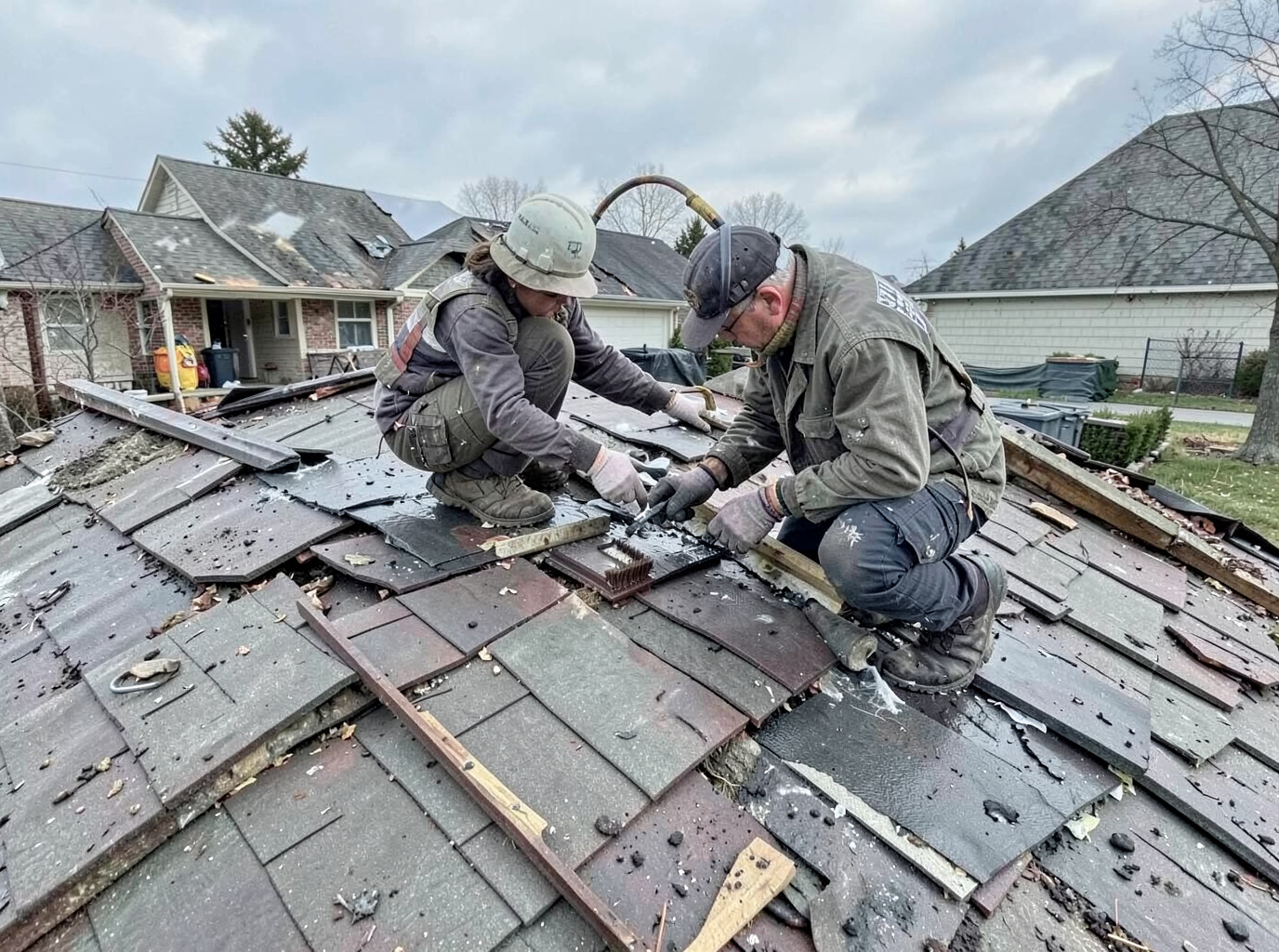
Gary homes built decades ago in neighborhoods like Glen Park and Black Oak often carry older asphalt shingle systems that take a beating from Lake County's humid continental climate. Lake-effect snow piles up fast in winter, followed by freeze-thaw cycles that open seams and crack flashing around chimneys and vents. High winds off Lake Michigan drive rain under edges in Miller Beach and Westside properties, while summer storms bring hail that bruises granules loose on south-facing slopes. A thorough inspection must check both the obvious dents and the hidden water paths that travel down into attics above older plaster ceilings.
After a storm passes, crews working out of Gary focus first on temporary tarping to stop active leaks before permanent repairs. Wind-driven rain commonly forces water past step flashing on the many two-story brick homes near the Genesis Convention Center and Downtown Gary. Tree limbs from mature oaks in Brunswick and Black Oak frequently puncture valleys or tear gutters, sending water against the foundation. Matching replacement shingles to faded stock requires pulling from the same manufacturer batch when possible, because partial patches on older roofs show immediately under Gary's bright summer sun.
Insurance claims for storm work in Lake County move faster when the crew documents every dent, lifted shingle, and displaced ridge cap with photos tied to the specific address. East Chicago and Hammond border properties share the same wind exposure, so crews often handle jobs across city lines in a single day. Proper underlayment replacement in the affected section prevents the ice dam leaks that return every February when snow melts against the eaves. Homeowners who skip the full slope inspection usually see the same leak reappear the next heavy rain.
Technician insight
In Gary the thing that catches most people out with storm damage roof repair is how lake-effect snow sits against the north eaves on the older two-story stock in Glen Park and Black Oak; the melt water finds every lifted shingle from the previous wind event and travels straight into the attic before homeowners notice anything on the ceiling.
Wind and Snow Damage on a Glen Park Roof
A two-story home near 25th and Broadway showed water stains after a January lake-effect snow. Inspection found lifted shingles along the north valley and failed step flashing where wind had worked the metal loose. Crew replaced the damaged valley section, reset the flashing, and added ice-and-water shield at the eaves. The attic stayed dry through the next thaw cycle.
Storm Damage Roof Repair Services We Offer
✓Hail Damage Shingle Assessment
Detailed inspection of granule loss and mat fractures on roofs in Miller Beach and Glen Park after hail events.
✓Wind Driven Rain Leak Repair
Sealing lifted edges and failed flashing on homes exposed to Lake Michigan winds in Westside and Downtown Gary.
✓Emergency Storm Tarping
Same-day temporary coverage to protect interiors in Lake County neighborhoods until permanent repairs can be scheduled.
✓Tree Limb Damage Restoration
Removal of fallen branches and repair of punctured valleys on older homes in Brunswick and Black Oak.
✓Gutter and Downspout Storm Repair
Straightening, re-hanging, and sealing gutters damaged by ice and wind on properties near Marquette Park.
✓Flashing and Ridge Cap Replacement
Replacing displaced metal flashing and ridge vents loosened by high winds around Gary Chicago International Airport flight paths.
Storm Damage Roof Repair Cost in Gary, IN
| Service | Typical Range | What Affects It |
|---|---|---|
| Initial Storm Inspection | $75–$150 | Waived if repair work proceeds; higher on multi-story homes in Miller Beach. |
| Emergency Tarping | $200–$450 | Depends on roof pitch and square footage needing coverage after high winds. |
| Hail or Wind Section Repair | $800–$2,800 | Varies by number of squares affected and whether underlayment must be replaced. |
| Flashing and Ridge Work | $350–$900 | Common add-on when lake-effect snow has worked under ridge caps in Glen Park. |
Ranges are typical for Gary, IN and confirmed with an exact written quote before any work starts.
How it works
- 1
On-Site Storm Assessment
Walk the full roof and attic in the affected Gary neighborhood to map every point of entry from wind, hail, or snow load.
- 2
Temporary Weather Protection
Install tarps and secure loose sections to stop active leaks before the next lake-effect event arrives.
- 3
Detailed Documentation
Photograph damage with address references for insurance adjusters working Lake County claims.
- 4
Targeted Permanent Repair
Replace damaged sections with matching materials and restore flashing to prevent repeat leaks from freeze-thaw cycles.
- 5
Final Walk-Through
Review all repaired areas from both roof and attic so the homeowner sees exactly what was addressed.
Pricing
Most storm repair jobs in Gary are handled through insurance; out-of-pocket costs vary by extent of hidden damage found during inspection.